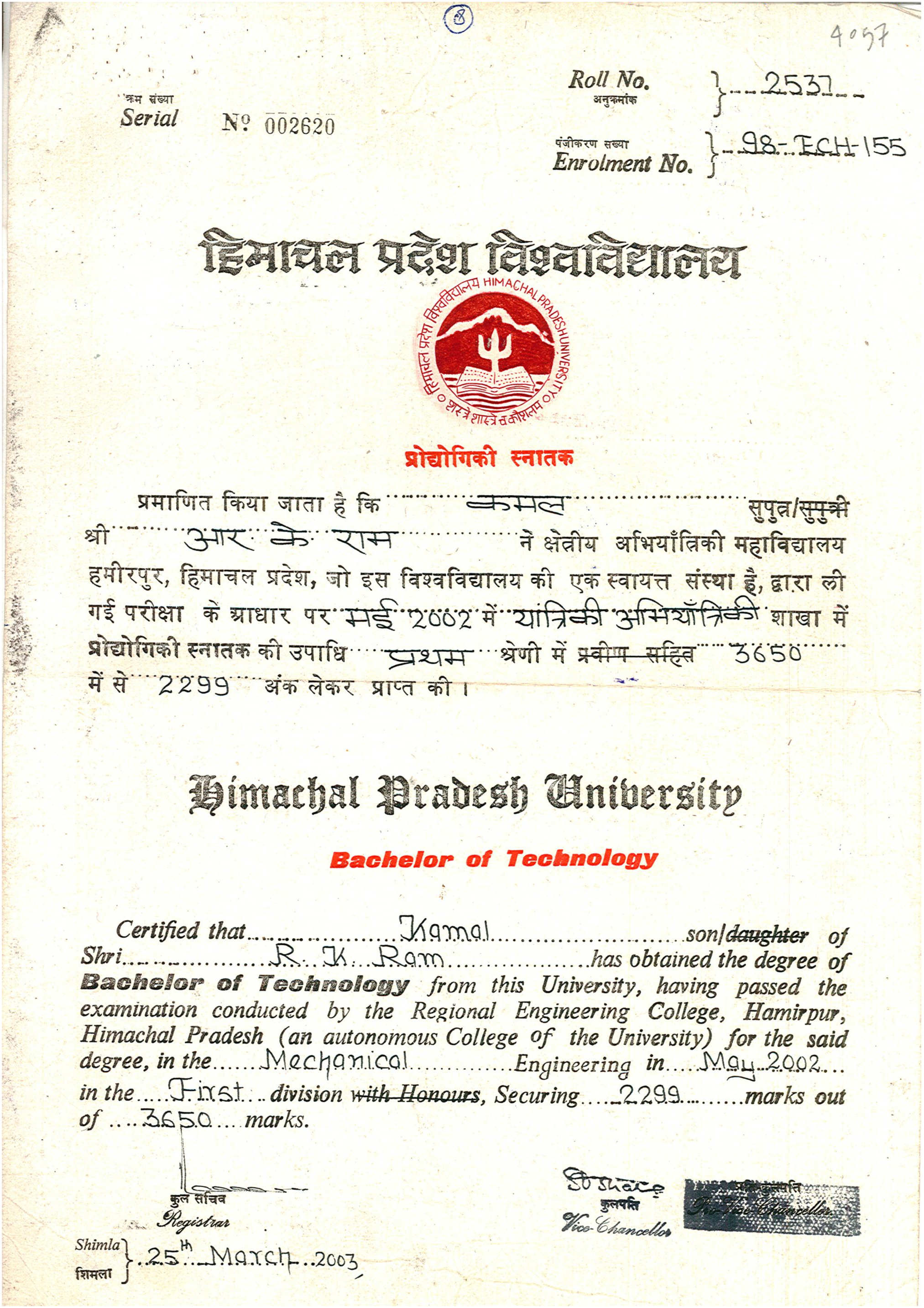
Bechelor of Technology
REC/NIT Hamirpur (H.P.),
India, [1998 - 2002].






















PLUMBING DESIGN
PLANNING DRAIN, WASTE & VENT SYSTEM
1) Materials:
Drainage pipeing shall be HDPE, PVC, ABS, uPVC, Cast Iron, Galvanized Steel, Lead, Copper, Brass, Stainless Steel, extra-strength vitrified clay pipe, or other approved materials having asmooth uniform bore. In general, materials must be freee from defects and meet the standards of the buiding department.
2) Joints and Connections
Joints and connections in the plumbing system shall be gas tight and watertight for the pressure required by test, with the exceptions of those of perforated or open joint piping that are installed for the purpose of collecting and conveying ground or sepage water to the underground storm drains.
Different types of joints used in plumbing system are : Threaded joints, Brazed joints, Soldered joints, Welded joints, Flanged joints, Compression joints, Grooved joints etc
.
3) Changes in Direction of Drainage Flow
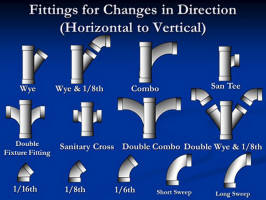
(a) Changes in direction of drainage piping shall be made by appropriate used of approved fittings and shall be angle of angles presented by 22.5⁰ (1/16), 45⁰ (1/8), 60⁰ (1/6) or other approved fittings of equivalent sweep.
(b) Horizontal drainage lines, connecting with a verticle stack, shall enter through combination of wye branch and 45⁰ bend or 45⁰ wye branch fittings.
(c) Verticle drainage lines connecting with other horizontal drainage lines shall enter through 45⁰ wye branch orcombination of wye and 45⁰ bend.
4) Fixture Traps
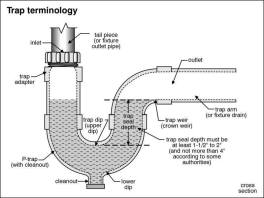
(a) Fixture traps create a liquid seal that prevents drainage system odors, gases and even vermin (wild animals carrying disease) from entering the building through the fixtures.
(b) Fixture trap size shall be sufficient to drain the fixture rapidly and in no case less than given in Table 5.2 (NSPC). No trap shall be larger than the drainage pipe into which it discharges.
(c) Fixture traps shall be self-scouring and shall have no interior partitions except where such traps are integral with the fixture or where corrosion resitant materials of plastic or glass are used. Solid connections, slip joints, or couplings may be used on the trap inlet, trap outlet, or within the trap seal
.
(d) Each fixture traps shall have a liquid seal of not less than 2" and not more than 4".
5) Cleanouts
(a) A drain cleanout provides access to main sewer line and is located outside of building or high level in ceiling inside toilets
(b) There are two basic types of code-approved cleanouts; conventional cleanouts and manholes. Conventional cleanouts with removable plugs are required on drainage pipes within a building or ona private sewer.
(c) Manholes serve as junctions to join one or more sewer lines. They allow access to inspect and clear the lines of solids that accumulate there. Manholes are common in private sewage that serve several large buildings. Install manholes at every change in grade, chnage in direction, and junction of two or more sewers. And don't exceed 300 feet between manholes.
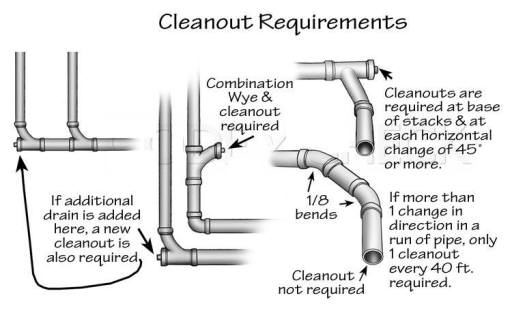
(d) Provide a cleanout on the upper terminal of each horizontal drainage pipe.
(e) A cleanout shall be provided near the base of each verticle waste or soil stack 6" above FFL.
(f) Clenouts must be easily accessible for easy cleaning.
(g) Cleanouts shall be installed at change of direction in drainage piping with 60⁰, 70⁰ and 90⁰ fittings. Cleanouts shall not be required where changes of direction are made with one or more 22.5⁰ or 45⁰ fittings.
(h) Cleanouts shall be provided for concealed piping in wall or floor.
(i) Cleanouts shall be installed so that it opens in the direction of the flow of the drainage line or at right angles thereto.
(j) Cleanout sizes shall conform with Table 5.4.9 (NSPC).
(k) Cleanouts on 3" or larger pipes shall be so installed that there is a clearance of not less that 18" for the purpose of rodding. Cleanouts smaller than 3" shall be so installed that there is a 12" clearance for rodding.
6) Slope of Horizontal Drainage Piping
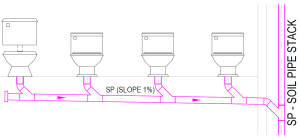
(a) Horizontal drainage piping shall be installed in uniform alignments at uniform slopes not less than 1/4" per foot (20.9 mm/m) two percent (2%) for 2" pipe size and smaller and less than 1/8" per foot (10.9 mm/m) or one percent (1%) for 3" pipe size and larger.
(b) Where conditions do not permit building drains and sewer to be laid with slope as great as that specified, a lesser slope may be permitted by the Authority Having Jurisdiction.
(c) Whereever practicable, all plumbing fixtures shall be drained to public sewer or private sewer disposal system by gravity.
7) Vents and Venting
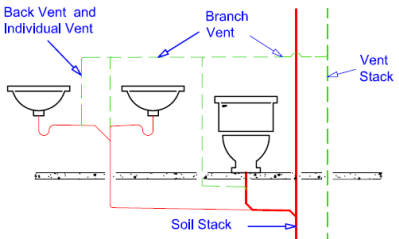
(a) Each plumbing fixture trap shall be protected against siphonage and back pressure, and air circulation shall be ensured throughout all parts of the drainage system by means of vent pipes.
(b) Vent pipes supply fresh air to each plumbing fixture in the house, which helps the system move water through the drainage pipes each time a toilet is flushed or a sink is drained. Vents also prevent sewer gases from entering the home and all wastewater gas and ador to escape.
(c) Vent pipes shall terminate not less than 6" above the roof, measured from the highest point where the vent intersects the roof.
(d) Vent terminals shall not be located where vapors can enter the building. No vent terminal shall be located directly beneath any door, window or other ventilating opening of a building.
(e) Vent and branch vent pipe shall be free from drops and sags and be sloped and connected as to drain by gravity to the drainage system.
(f) Every vent shall rise vertically to a minimum of 6" above the flood level of the rim of the fixture being served before connecting to another vent.
(g) Never locate vent pipes in stairways or hoistways.
8) Grease Interceptors
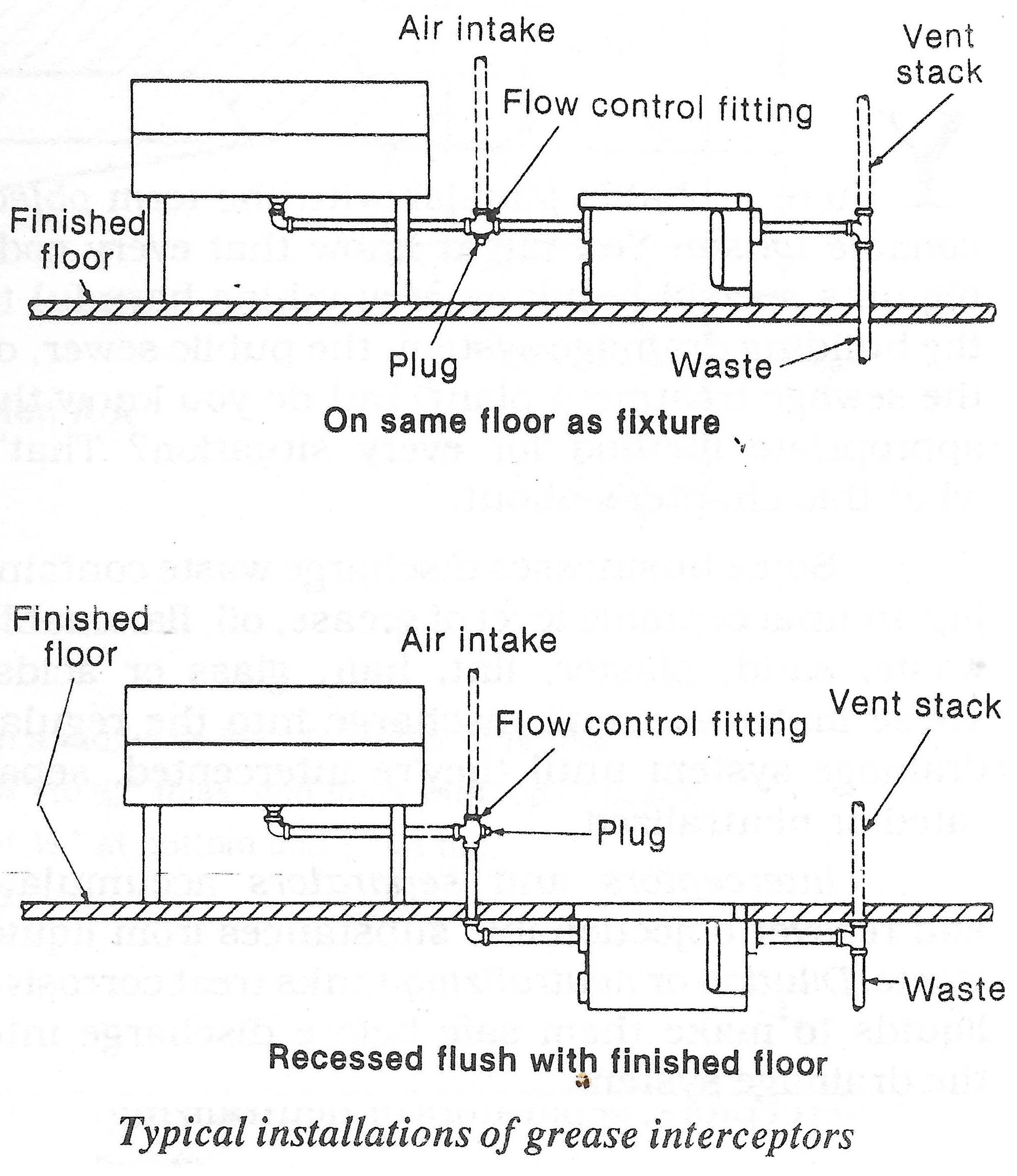
(a) In commercial buildings where food is processed, prepared or served, grease interceptors shall be installed in a waste line. If not, the accumulated grease will clog the drainage pipes.
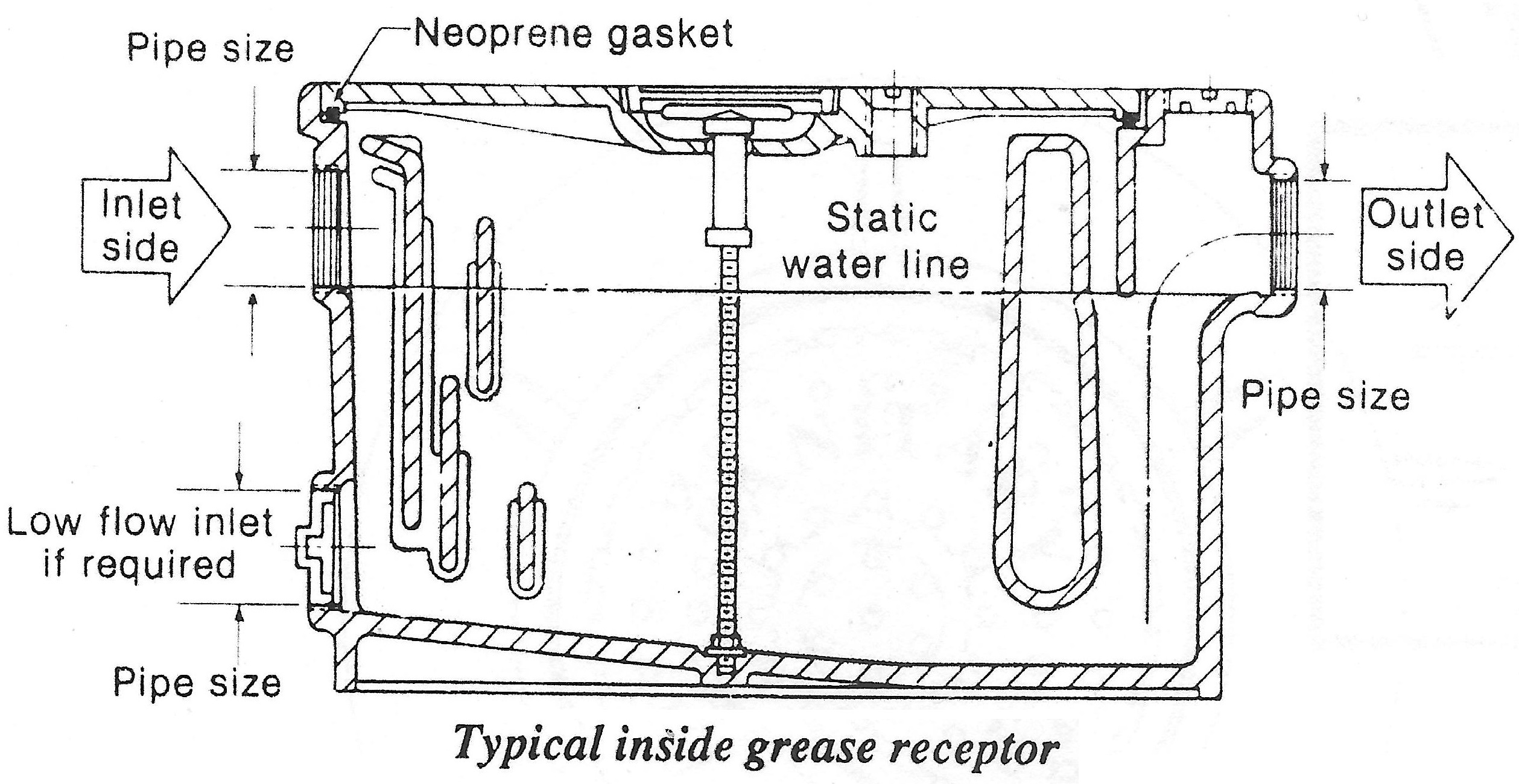
(b) Use an inside interceptor for small restaurants or other businesses generating minor amount of grease. It may be floor mounted or installed below the floor.
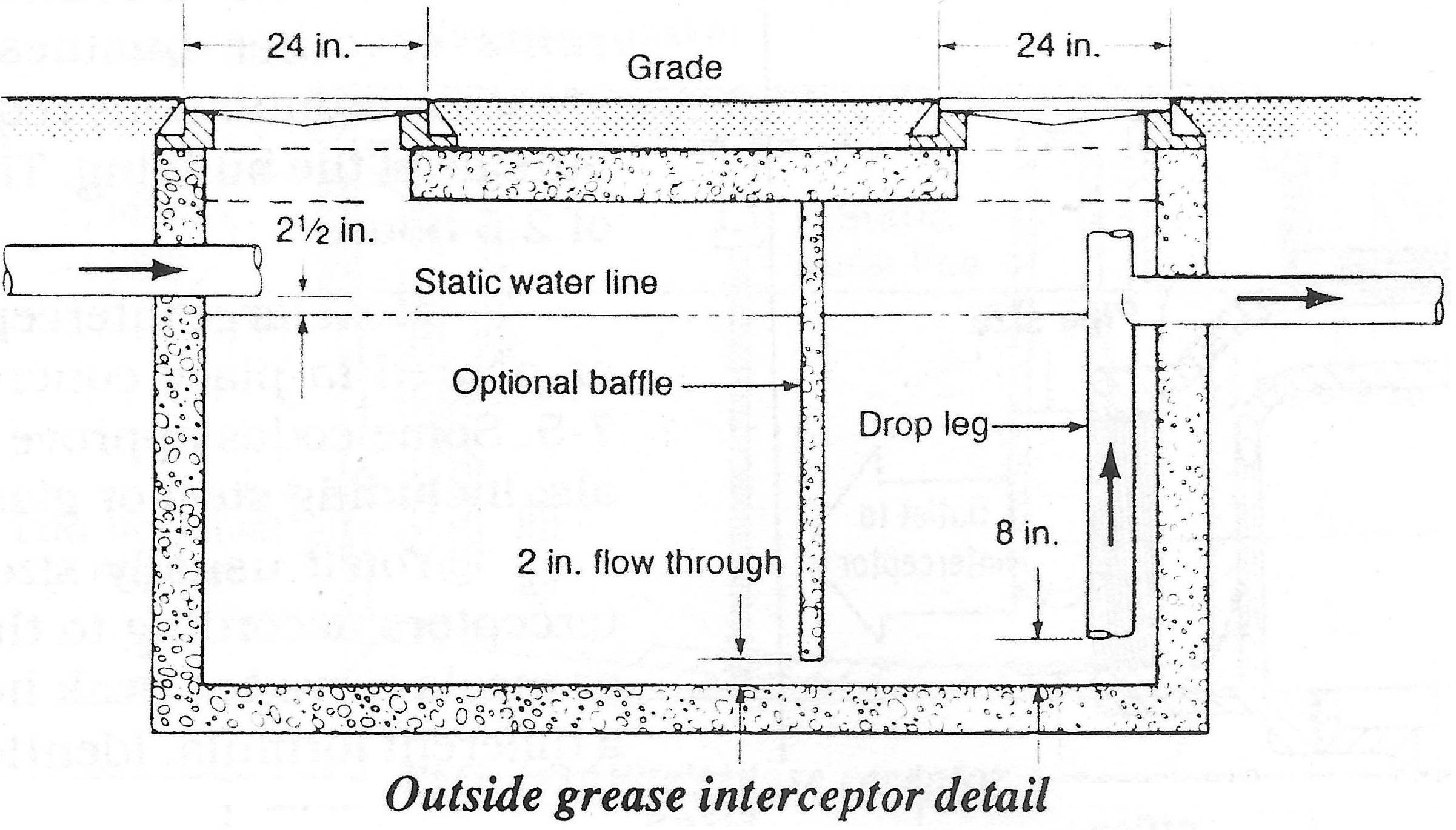
(c) Larger restaurants or other businesses generating sizable grease accumulating require interceptors located outside of the building. They need a retentin time of 2.5 hours. Most large interceptors are made of precast or poured-in-place concrete.
(d) Place each grease intereptor where there's easy acess for inspection, cleaning and removal of intercepted grease.
9) Gasoline, Oil and Sand Interceptors
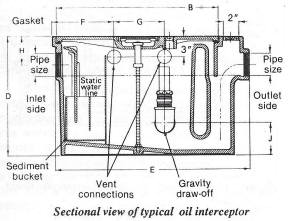
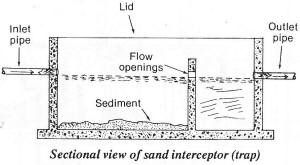
(a) We need to provide interceptors to keep gasoline, grease, oil and sand out of sanitary drainage.
(b) Anyplace where motor vehicles are repaired and floor drainage is provided.
(c) Anyplace where motor vehicles are commerical washed.
(d) Anyplace where oil, gasoline or ther volatile liquids can be discharged into the sanitary drainage.
(e) Any factory which has only or flammable wastes from storage, maintenance, repair or testing processes.
10) Neutralizing Tanks
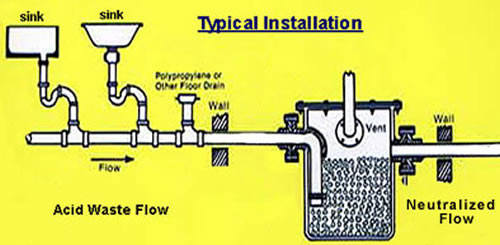
Corrosive liquids, spent acids and other chemicals might damage or destroy a DWV drainage system or create noxious or toxic fumes. This waste must pass through a properly designed dilution or neutralizing tank. The tak must automatically provide enough water to dilute the corrosive liquids until they are not damaging to the drainage systems.
11) Indirect Waste Piping and Special Wastes
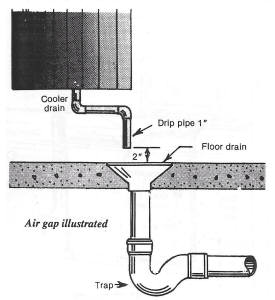
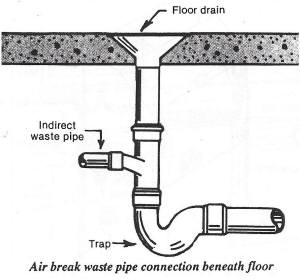
(a) A special waste pipe including oil, sand, grease, glass and storm water that does not connect directly with the drainage system but that discharges into the drainage system thorugh an air break or air gap into a trap, fixture, receptor or interceptor are called indirect waste piping.
(b) Refrigerator coils, walk-in freezers, ice boxes, ice-making machines and bar sinks need indirect waste pipes.
(c) We can use either an air gap or air break as the indirect waste connection. The air gap is the unobstructed vertical distance between the waste pipe outlet and the flood level rim of the receptacle. Vertical distance shall be twice the diameter of the drain it serves.
(d) Air break drainage is a physical separation, usually a low inlet into the indirect waste receptor.
12) Air Conditioning Condensate Drains
(a) When air conditioning units are located on the roof, waste may discharge on to the roof and into the roof drain.
(b) When an air conditioning unit is centrally located below the roof of a building, it may indirectly connect to a rain leader pipe. Drainage from an air handling equipments room must be by indirect means.
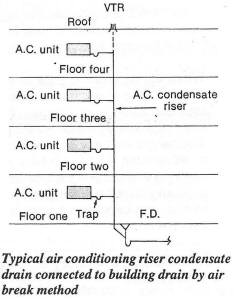
(c) The main condensate drain line in a multi-storey building may receive the discharge from many air conditioning units. Each individual unit must be trapped.
(d) Some codes require a vent in the main drain line above the highest connection.
13) Storm Drainage Systems
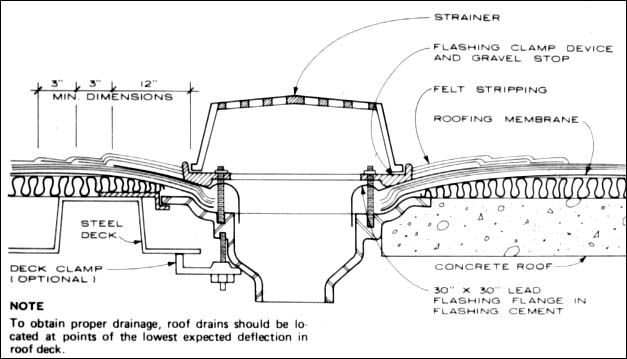
(a) The storm drainage system carries rainwater to a legel disposal point. It includes roof drain, area drians, catch basins, gutters, leaders, building storm drains, building storm sewers and ground surface storm sewers.
(b) You must provide a strainer where roof surface drain into the inlet of an inside leader. The strainer cover must extend at least 4" above the roof surface.
(c) Roof drains must be made of cast iron , copper, lead, or ome other approved corrosion resitant materials.
(d) Traps are not required for regular storm water drains connected to a storm drainage system.
14) Septic Tank System
(a) A septic tank is simply a water tight receptacle for the sewage discharged by a building drainage system. It seperates the solid from the liquid wastes before the treated liquid seeps into the ground.
(b) The tank should be large enough to hold approx. 24 hours of an anticipated flow. This retention period gives the bacterial action time to digest the soilds.
(c) The new sewage enetring the tank also forces an equal amount of treated liquid out through the outlet tee of the septic tank.
(d) When the bacterial process is complete, the remaining solids setlle to the bottom as sludge. Lighter undigested particles rise and form a scum on top of the liquid contents. Over a period of years, the sludge and scum builds up and reduce the tank efficiency. Periodic cleaning keeps it workiing effectively.