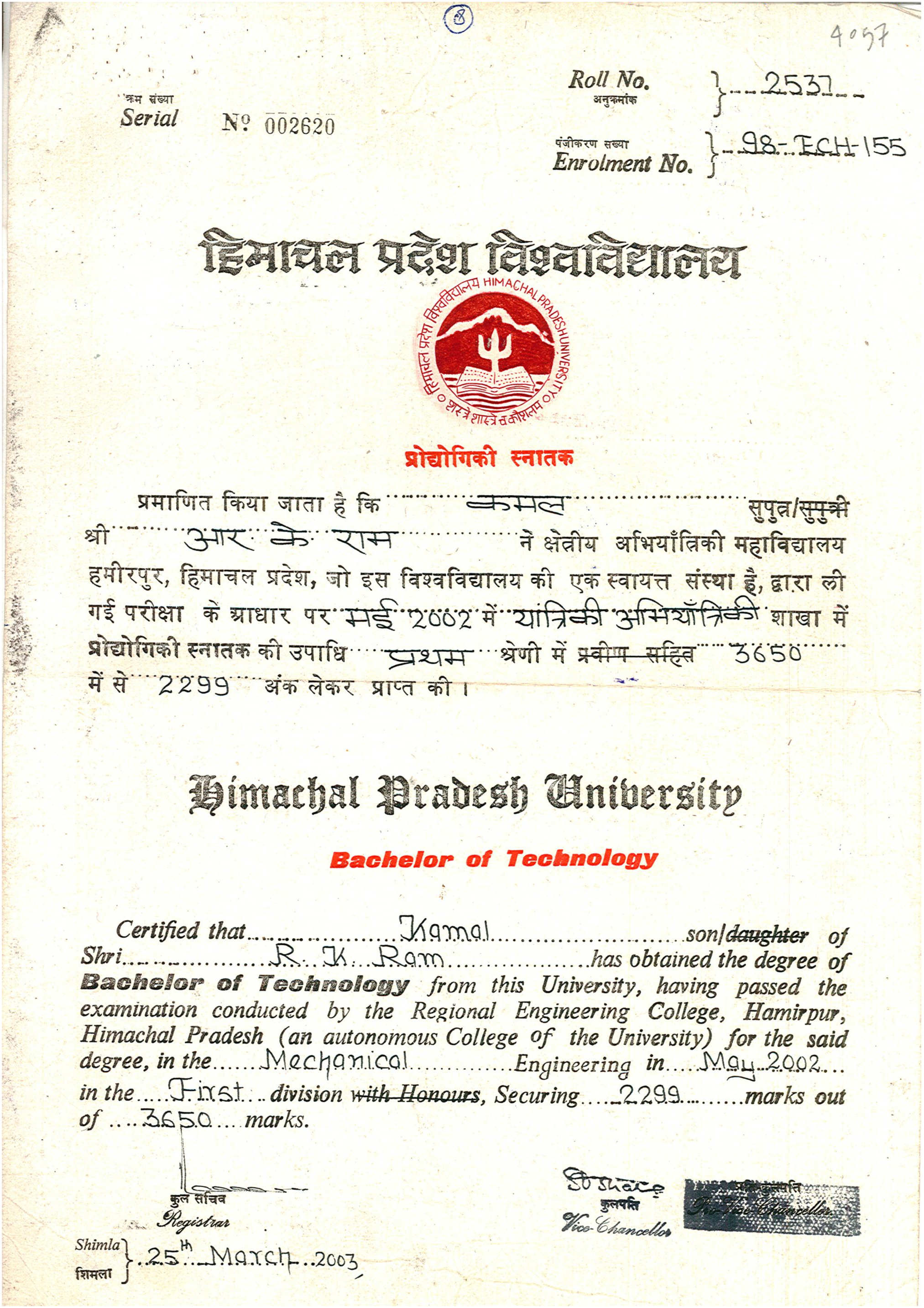
Bechelor of Technology
REC/NIT Hamirpur (H.P.),
India, [1998 - 2002].




















POTABLE FIRE EXTINGUISHERS
POTABLE FIRE EXTINGUISHERS
1) Classification of Fire
Class K Fires
Fires in cooking appliances that involve combustible cooking media (vegetable or animal oils and fats).
2) Types of Fire Extinguishers
Water and Foam
Water and Foam
fire extinguishers extinguish the fire by taking away the
heat
element of the fire triangle. Foam agents also separate the
oxygen
element from the other elements.
Water extinguishers are for Class A fires only - they should not be used on Class B or C fires. The discharge stream could spread the flammable liquid in a Class B fire or could create a shock hazard on a Class C fire.
Carbon Dioxide
Carbon Dioxide
fire extinguishers extinguish fire by taking away the
oxygen
element of the fire triangle and also be removing the
heat
with a very cold discharge.
Carbon dioxide can be used on Class B & C fires. They are usually ineffective on Class A fires.
Dry Chemical
Dry Chemical
fire extinguishers extinguish the fire primarily by interrupting the
chemical reaction
of the fire triangle.
Today's most widely used type of fire extinguisher is the multipurpose dry chemical that is effective on Class A, B, and C fires. This agent also works by creating a barrier between the oxygen element and the fuel element on Class A fires.
Ordinary dry chemical is for Class B & C fires only. It is important to use the correct extinguisher for the type of fuel! Using the incorrect agent can allow the fire to re-ignite after apparently being extinguished succesfully.
Wet Chemical
Wet Chemical
is a new agent that extinguishes the fire by removing the heat of the fire triangle and prevents re-ignition by creating a barrier between the
oxygen
and
fuel
elements.
Wet chemical of Class K extinguishers were developed for modern, high efficiency deep fat fryers in commercial cooking operations. Some may also be used on Class A fires in commercial kitchens.
Clean Agent
Halogenated
or
Clean Agent
extinguishers include the halon agents as well as the newer and less ozone depleting halocarbon agents. They extinguish the fire by interrupting the
chemical reaction
and/or
removing heat
from the fire triangle.
Clean agent extinguishers are effective on Class A, B and C fires. Smaller sized handheld extinguishers are not large enough to obtain a 1A rating and may carry only a Class B and C rating.
Dry Power
Dry Powder
extinguishers are similar to dry chemical except that they extinguish the fire by separating the
fuel
from the
oxygen
element or by removing the
heat
element of the fire triangle.
However, dry powder extinguishers are for Class D or combustible metal fires, only. They are ineffective on all other classes of fires.
Water Mist
Water Mist
extinguishers are a recent development that extinguish the fire by taking away the
heat
element of the fire triangle. They are an alternative to the clean agent extinguishers where contamination is a concern.
Water mist extinguishers are primarily for Class A fires, although they are safe for use on Class C fires as well.
Cartridge Operated Dry Chemical
Cartridge Operated Dry Chemical
fire extinguishers extinguish the fire primarily by interrupting the
chemical reaction
of the fire triangle.
Like the stored pressure dry chemical extinguishers, the multipurpose dry chemical is effective on Class A, B, and C fires. This agent also works by creating a barrier between the oxygen element and the fuel element on Class A fires.
Ordinary dry chemical is for Class B & C fires only. It is important to use the correct extinguisher for the type of fuel! Using the incorrect agent can allow the fire to re-ignite after apparently being extinguished successfully.
3) Extinguishers Color Coding
4) Use of Fire Extinguishers
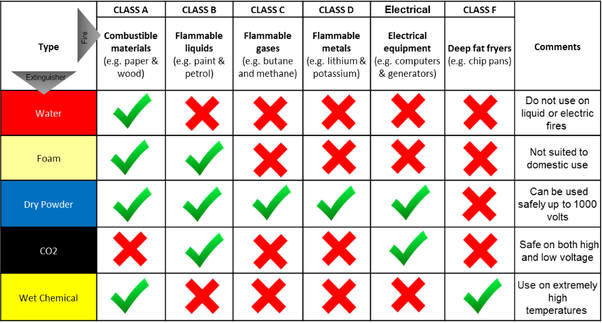
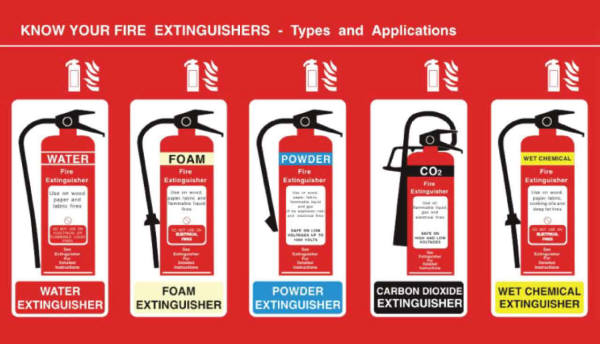
Not all fires are the same. Per NFPA 10, burning may be classified into one or more of the following fire classes and your fire protection specialist will select the right fire extinguisher size and agent for the hazard.


Class A Fires:
Fires in ordinary combustible materials, such as wood, cloth paper, rubber, and many plastics.
Class B Fires:
Fire in flammable liquids, combustible liquids, petroleum greases, tars, oils, oil based paints, solvents, lacquers, alcohols, and flammable gases.
Class C Fires:
Fires that involve energized electrical equipment where the electrical non-conductivity of the extinguishing media is of importance. (When electrical equipment is de-energized, fire extinguishers for class A and class B firs can be used safely.
Class D Fires:
Fire in combustible metals, such as magnesium, titanium, zirconium, sodium, lithium, and potassium.
Fire extinguishers can be heavy, so it's a good idea to practice picking up and holding an extinguisher to get an idea of the weight and feel.
Take time to read the operating instructions and warnings found on the fire extinguisher label. Not all fire extinguishers look alike.
Practice releasing the discharge hose or horn and aiming it at the base of an imagined fire. Do not pull the pin or squeeze the lever. This will break the extinguisher seal and cause it to lose pressure.
When it is time to use the extinguisher on a fire, just remember PASS!
Pull the pin.
Aim the nozzle or hose at the base of the fire from the recommended safe distance.
Squeeze the operating lever to discharge the fire extinguishing agent.
Starting at the recommended distance, Sweep the nozzle or hose from side to side until the fire is out. Move forward or around the fire area as the fire diminishes. Watch the area in case of re-ignition.
5) Fire Extinguishers Inspection
Like any mechanical device, fire extinguishers must be maintained on a regular basis to ensure their proper operation. You, the owner or occupant of the property where the fire extinguishers are located, are responsible for arranging your fire extinguishers' maintenance.
Fire extinguishers must be inspected or given a "quick check" every 30 days. For most extinguishers, this is a job that you can easily do by locating the extinguishers in your workplace and answering the three questions below.
Is the extinguisher in the correct location
Is it visible and accessible
Does the gauge or pressure indicator show the correct pressure?
-
Is